Frequently Asked Questions about ticks in New Jersey

What to know before you head outside

Spring in Northern New Jersey is genuinely beautiful. The trails through The Tourne are alive again. A walk with the dog around the RVA Fields is calling your name. Jonathan’s Woods smells like pine and possibility.

Somewhere in all that glorious greenery, a creature roughly the size of a poppy seed is waiting for you with all eight legs outstretched, ready to absolutely ruin your afternoon. 

Welcome to tick season. Let’s talk about it.

First, Some Fun Facts (Because These Things Are Genuinely Fascinating and Terrifying)

Before we get into practical protection tips, we need to take a moment to appreciate just how diabolically resourceful ticks are. This isn’t just some dumb bug bumbling around a leaf. This is a miniature apex parasite with a few million years of evolutionary tricks up its sleeve

Ticks can fly (kind of). 

Researchers at the University of Bristol published a study in Current Biology in 2023 demonstrating that ticks can be pulled through the air by static electricity. Since ticks cannot jump, scientists had long wondered how they managed to bridge that final gap between a blade of grass and a passing host. As you walk through a field, your body builds up an electrostatic charge from rubbing against grass, clothing, and the environment. That charge can reach hundreds to tens of thousands of volts, which is more than your household outlets at home. 

When you get close enough to a tick, it gets yanked across an air gap several times its own body length, which researchers compared to a human jumping multiple flights of stairs in one go. The study author, Sam England, and his team literally frolicked through forests dragging bedsheets to map electrostatic fields around animals. That sounds like a lost episode of MythBusters to me, but its actually science! 

Infected ticks know where to hide on you. 

Research led by Dr. Saravanan Thangamani at SUNY Upstate Medical University found that ticks carrying Lyme disease behave differently from their uninfected counterparts. Lyme-infected deer ticks showed a statistically significant preference for the chest, midsection, groin, and upper thigh: areas that are harder for you to spot and easier for them to stay hidden. The infected tick’s behavior is literally altered by the pathogen it’s carrying, steering it toward better feeding real estate on your body. That is next-level creepy

One tick can infect you with multiple diseases simultaneously.

This is not a fun fact so much as a fact that demands your full attention. A single deer tick can carry Lyme disease, Babesiosis, and Anaplasmosis all at once, and it can transmit more than one of them in a single bite. Powassan virus, another tick-borne illness, can transmit to a human within the first hour of a bite, which is long before you’d ever notice anything was attached to you.

New Jersey is legendary for ticks, and not in a good way.

The state has ranked among the top five in the nation for Lyme disease cases for years. In 2023 alone, over 7,200 cases were reported statewide. In 2022, Hunterdon County, not far from Morris county, recorded a Lyme disease incidence rate of 426 cases per 100,000 people. To put that in perspective, Hunterdon County only has around 130,000 residents. That is a truly staggering number for a single county

When Do Ticks Get Bad in Northern NJ? 

Ticks are active anytime the temperature is 40 degrees F in their specific location. Remember that nice stretch of weather in January? Yeah, the ticks do as well. 4 years running we have found ticks on our dog Eddie in the dead of the winter. Luckily, he is white as the driven snow, so they are a bit easier to spot on him.

Tick “season” in New Jersey officially begins in March and runs through November, but spring is particularly dangerous because it combines two terrible things: ticks becoming newly active and humans suddenly wanting to go outside after months of winter. Deer ticks and their nymph stage are most active in spring and early summer, and nymphs are the most dangerous life stage precisely because they are tiny (we’re talking about something smaller than a sesame seed) and nearly impossible to spot without really looking.

Common ticks of New Jersey

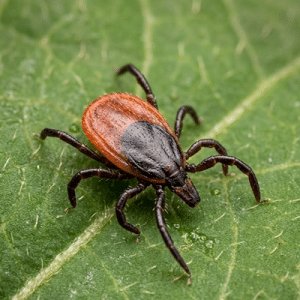
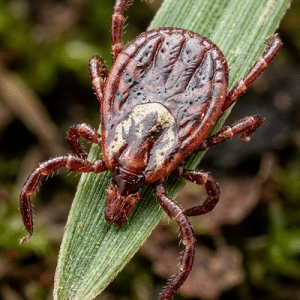
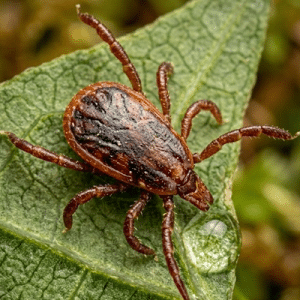
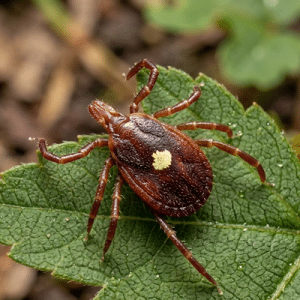
Four tick species roam New Jersey: the blacklegged tick (also called the deer tick), the American dog tick, the brown dog tick and the lone star tick,. 

Blacklegged (Deer) Tick

Ixodes Scapularis

The deer tick is your primary nemesis in Northern NJ, responsible for transmitting Lyme disease, Anaplasmosis, Babesiosis, and the Powassan virus.

Abundant in population, and the tiniest species of all New Jersey ticks (especially their nymphs), blacklegged ticks are a constant threat.

American Dog Tick

Dermacentor variabilis

Also known as the wood tick, American dog ticks carry Rocky Mountain spotted fever, which sounds very far away but absolutely is not.

Commonly found it wooded areas and areas with high grass, this large tick can also transmit tick paralysis via a neurotoxin produced in their salivary glands.

Brown Dog Tick

Rhipicephalus sanguineus

Brown Dog Ticks are one of the most prevalent vectors of dog diseases in the world. It is a three-host tick, meaning it feeds on three different hosts at different life stages.

Identified by their brownish red color, Brown dog ticks can also carry Rocky Mountain Spotted Fever, as well as canine ehrlichiosis and canine babesiosis.

Lone Star Tick

Amblyomma americanum

Lone star ticks can cause Ehrlichiosis and, in a plot twist nobody asked for, a bite from one can trigger Alpha-Gal Syndrome, which is an allergy to red meat.

Luckily for us, the Lone Star’s primary habitat is salt marshes, so unless you’re spending a lot of time down the shore, they are rarely seen up North.

Protecting Yourself from ticks: A Practical Guide That Actually Works

Dress For the Occasion

When you’re hiking, gardening, or doing anything in or near wooded or grassy areas, your clothing choices matter enormously. Wear long pants and tuck them into your socks. Yes, you will look ridiculous. You will also have far fewer ticks making it to your skin. Light-colored clothing helps you spot ticks more easily before they find a spot to attach. Pull long sleeves down and tuck shirts in at the waist.

Use Permethrin on Your Clothes

This is arguably the single most effective thing you can do. Permethrin is a synthetic insecticide that you spray directly onto clothing, shoes, and gear. It kills ticks on contact within about 30 seconds. Crucially, it bonds to fabric fibers and remains effective through dozens of washes, so you can treat your hiking pants at the start of the season and be covered all spring and summer. Do not apply it directly to skin; it’s for fabric only. Permethrin-treated clothing is the gold standard in tick prevention.

NOTE: Special attention should be paid to using permethrin around cats. Permethrin is highly toxic to cats. Don’t apply it near cats, and if you are wearing permethrin treated clothing, change your clothes before letting you cats rub up on you, as cats tend to do.

Use Repellent on Your Skin

On exposed skin, use an EPA-registered repellent. DEET at 25 to 30 percent concentration provides about eight hours of reliable protection. Picaridin at 20 percent concentration can last up to 14 hours and is less oily than DEET. Oil of lemon eucalyptus is also proven effective and is a good plant-based option. Apply to the back of the neck, ankles, and any other exposed areas before heading out.

Walk the Middle of the Trail

Ticks do not fall from trees. This is one of the most persistent myths about these creatures. Ticks “quest,” which means they cling to the tips of grasses and low vegetation with their front legs extended, waiting for a host to brush past. They never climb higher than about knee level in most cases. So staying on the center of a trail, away from the brushy edges, dramatically reduces your contact with questing ticks.

Do a Thorough Tick Check When You Get Home

This is not optional. This is the rule. Strip down and check yourself within two hours of being outdoors, ideally after a shower (which can physically wash unattached ticks off your body). Based on the research, pay especially close attention to the thighs, groin, waist, stomach, behind the knees, in and around the ears, the scalp, the armpits, and the belly button. Yes, the belly button. They will absolutely go there. Before you go inside, check your clothing. Toss everything into the dryer on high heat for at least ten minutes, because heat kills ticks where water alone may not. Check your pets, too, since your dog is essentially a fur-covered tick taxi that will deliver passengers directly into your bed.

Tick-Proof Your Yard 

The border between your lawn and any wooded or brushy area is prime tick habitat. Create a three-foot buffer of wood chips or gravel between the lawn edge and the woods, as ticks are reluctant to cross dry, exposed terrain. Mow frequently, clear leaf piles, and keep wood stacks away from the house. If deer wander into your yard regularly, they’re dropping ticks with every visit, so deer-resistant plantings around the perimeter are worth considering. 

Shameless plug – Buzz Off Pest Control knows ticks! Our combination tick / mosquito control services can dramatically reduce the populations of these pests on your property 

You’re already here, why not give us a call or fill out the contact form at the bottom of this page and see how we can help you! 

Know How to Remove a Tick Correctly

If you find one attached, use fine-tipped tweezers and grasp the tick as close to the skin surface as possible. Pull upward with steady, even pressure. Do not twist, jerk, or squeeze the body. Do not use nail polish remover, petroleum jelly, heat, or any folk remedy. Clean the bite area with rubbing alcohol or soap and water.

Save the tick in a sealed bag or container; you can have it tested by Rutgers Cooperative Extension or other services in New Jersey to determine the species and what pathogens, if any, it carries. The nearest Rutgers Cooperative Extensions in our area are in Morristown, not to far from Greystone Park Hospital,  and in Newton, near the Sussex County Main Library.

For deer ticks that were attached for 36 hours or more, contact your doctor within 72 hours. In high-risk areas like Northern NJ, a single prophylactic dose of doxycycline is sometimes prescribed to prevent Lyme disease from developing. 
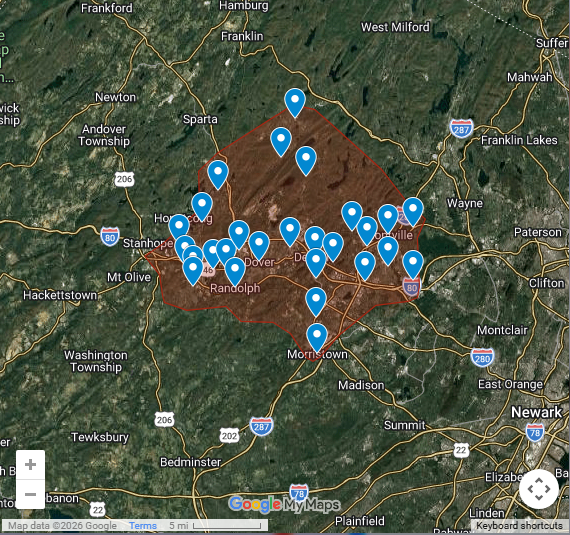
Tick Hotspots in Morris County

Basically, they’re everywhere. Just assume it.

We live on Diamond Spring Road in Denville. Although we treat a majority of our neighbors’ properties with great results, it’s not possible (nor legal) to treat everywhere. This is where the problem lies, there’s a lot of grass and shrubbery along the roads. The parks are teeming with ticks, and because most of our local parks include lakes and the Rockaway River, they can’t be treated by either the government or commercially. It seems we’re constantly picking ticks off of the pup after every walk. 

The Morris County Division of Mosquito Control, the heroes that they are, does not provide tick services. Although there is some cross protection in areas where they have treated for mosquitos, ticks and tick habitats are not their primary target. 

The Bottom Line

Northern New Jersey in the spring is genuinely spectacular, and ticks are absolutely not going to stop being a fact of life out here. But they are a manageable risk. Between permethrin-treated clothing, proper repellents, trail-smart hiking habits, and a diligent post-outing tick check, you can dramatically reduce your exposure. The science is clear, the tools are cheap, and the alternative (untreated Lyme disease) is a whole lot of misery.

So get outside. Enjoy Pyramid Mountain. Walk the Jockey Hollow trails. Just tuck those pants into your socks first. You’ll look silly. You’ll be fine.

Sources

  1. England, S., Lihou, K., Robert, D. (2023). Static electricity passively attracts ticks onto hosts. Current Biology. https://www.cell.com/current-biology/fulltext/S0960-9822(23)00772-8 
  2. University of Bristol. (2023). Static electricity attracts ticks to hosts. ScienceDaily. https://www.sciencedaily.com/releases/2023/06/230630123213.htm 
  3. Thangamani, S. et al. (2022). Human attachment site preferences of ticks parasitizing in New York. Nature/PubMed. https://pubmed.ncbi.nlm.nih.gov/36463334/ 
  4. SUNY Upstate Medical University. (2025). Tick season expected to be the worst yet. https://www.upstate.edu/news/articles/2025/2025-05-14-tick.php 
  5. Ocean County Health Department. (2025). Tips for Preventing Tick Bites and Lyme Disease. https://oceancountyhealth.gov/news/tips-for-preventing-tick-bites-and-lyme-disease/ 
  6. ID Care NJ. Avoiding Tick Bites: Prevention Information Specific to New Jersey. https://idcare.com/blog/avoiding-tick-bites/ 
  7. CentraState Healthcare System. (2025). Tick Season Is Here: What to Know. https://www.centrastate.com/blog/tick-season-is-here-what-to-know/ 
  8. Morningside Medical. (2025). NYC Record Tick Season: Protecting Your Family in 2025. https://www.mns.care/blog-posts/nyc-tick-season-2025-lyme-disease-prevention 
  9. Buzz Off Pest Control – Tick Control Services in Northern NJ https://buzzoffnj.com/tick-control-service-near-me-2/
  10. HHS / CDC. (2024). Tick-Borne Diseases and Associated Illnesses: Updated Scoping Review. https://www.hhs.gov/sites/default/files/2024-tbd-scoping-review.pdf 
  11. Morris County Division of Mosquito Control https://www.morriscountynj.gov/Departments/Mosquito-Control

This article is intended for general informational purposes only and does not constitute medical advice. The content here is not a substitute for professional medical consultation, diagnosis, or treatment. Always seek the guidance of a qualified healthcare provider with any questions you may have regarding a medical condition, tick bite, or tick-borne illness. If you believe you have been bitten by a tick and are experiencing symptoms,

Status Update: Pest Activity is Normal, but spring is coming! Give Buzz Off a call TODAY to see how we can keep the bugs out! Sign up for local updates